
The growth of biologic medicines is driving innovation in pharmaceutical packaging. Advanced solutions such as ready-to-use formats, prefillable syringes, autoinjectors, smart packaging, and automated inspection systems are helping address the complex requirements of biologics. As biosimilars, personalized therapies, and advanced biologics expand, packaging innovation can improve product stability, sterility, safety, supply-chain efficiency, and patient convenience.
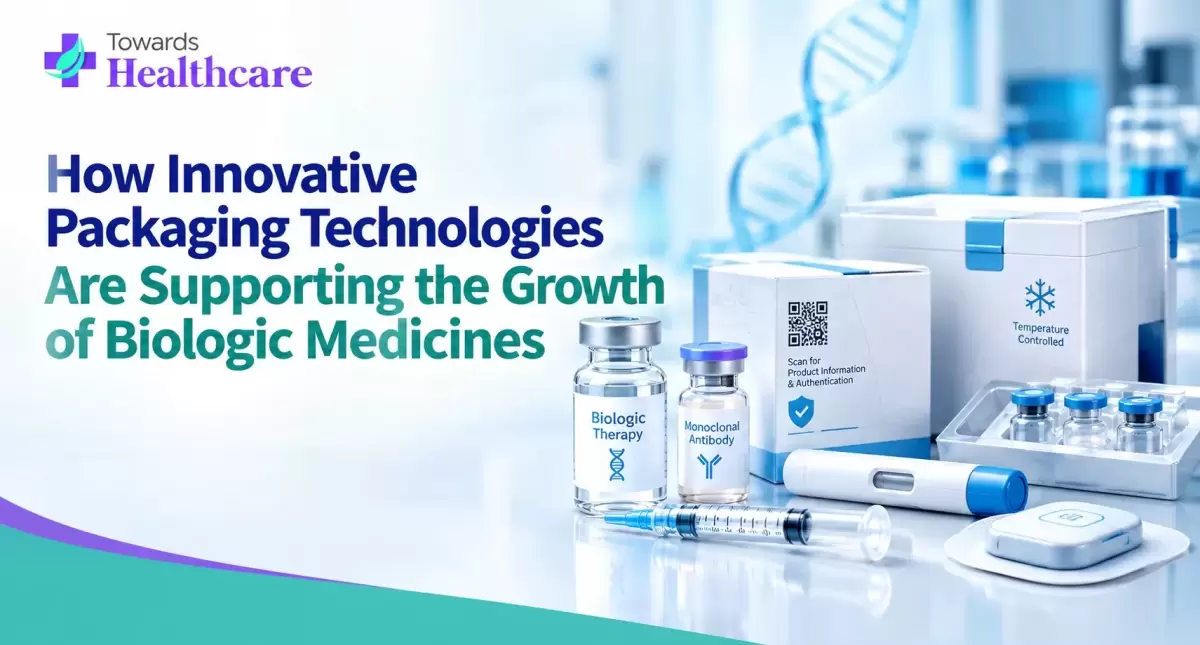
The rapid expansion of biologic medicines is creating new requirements for pharmaceutical packaging. Biologics such as monoclonal antibodies, vaccines, cell and gene therapies, and other complex medicines can be sensitive to temperature, contamination, and mechanical stress. Packaging therefore plays an important role in maintaining product stability, sterility, and safe delivery.
Biologics Growth Is Driving Packaging Innovation
The global biologics market was valued at $461.74 billion in 2022 and is projected to reach $817.48 billion by 2032, representing an 8.5% CAGR. Growth in chronic diseases, biotechnology innovation, and an aging population are contributing to demand for biologic therapies.
The rise of biosimilars is another important trend. The U.S. FDA had approved 61 biosimilars across 17 biological molecules by September 2024, increasing demand for reliable and cost-efficient packaging solutions.
Emerging Packaging Trends
Pharmaceutical packaging companies are responding with ready-to-use (RTU) and ready-to-fill formats, prefillable syringes, cartridges, autoinjectors, and on-body delivery systems. These formats can support convenient administration while helping maintain product quality.
Industry experts also highlight increasing interest in GLP-1 medicines, mRNA therapies, antibody-drug conjugates, cell and gene therapies, and personalized medicines. Smaller production batches associated with personalized therapies are increasing demand for flexible packaging and adaptable manufacturing processes.
Automation and AI are also transforming packaging operations. Automated inspection systems can help identify defects and reduce human error, while connected packaging can provide additional product and supply-chain information.
Challenges and Opportunities
Biologic packaging must address sterility, container integrity, drug compatibility, temperature sensitivity, complex formulations, and regulatory requirements. Manufacturers must also balance sustainability with high-performance protection.
These challenges create opportunities for innovative packaging companies to develop advanced containment systems, smart packaging, flexible delivery devices, and automated inspection technologies. As biologics become more complex and patient-centric, packaging innovation will remain an important part of safe, efficient, and convenient drug delivery.
Reference
https://www.towardshealthcare.com/insights/pharmaceutical-market-sizing








Comments (0)