
KraveBeauty launches Mochi Berrier Moisture Cream in a 100% Vivomer bio-based jar and cap made from waste biomass through microbial fermentation.
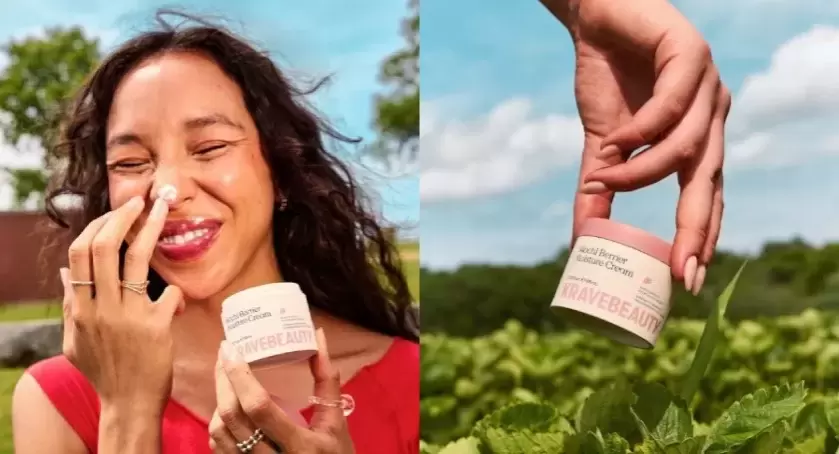
KraveBeauty introduces skincare cream in a bio-based polymer jar
KraveBeauty has launched Mochi Berrier Moisture Cream in a 100% Vivomer bio-based polymer jar and cap developed in partnership with UK sustainable packaging company Shellworks.
The packaging uses Vivomer, a natural polymer derived from waste biomass through microbial fermentation, offering a plastic-free alternative to conventional cosmetic packaging.
The launch combines a bio-based packaging material with an upcycled ingredient strategy, as the cream itself contains extract made from strawberry stems and leaves that would otherwise be discarded after harvesting.
Vivomer replaces conventional cosmetic plastic
The jar and cap are manufactured from Vivomer, which KraveBeauty describes as a natural polymer produced from waste biomass through microbial fermentation.
The company positions the material as a plastic-free and petrochemical-free alternative for cosmetic packaging.
The packaging is designed to provide the durability and protection required for a skincare product while offering a different end-of-life pathway from conventional fossil-based plastic.
Jar and cap use the same material platform
Both the jar and cap use Vivomer, simplifying the packaging structure compared with cosmetic formats that combine several different materials.
KraveBeauty says the material is free from BPA, PFAS, phthalates and other toxic additives.
The simplified construction reflects the broader move towards packaging systems in which individual components are considered together rather than treating the main container separately from its closure.
Home compostability targets a different end-of-life pathway
The jar and cap are certified to break down in a healthy home compost environment, with the company indicating that degradation typically takes around 52 weeks depending on material thickness.
KraveBeauty also states that the material can biodegrade in soil, landfill or industrial compost environments without leaving microplastics.
Where composting is unavailable, the company recommends recycling the packaging through curbside collection where accepted.
Recycled paper carton completes the packaging system
The cream is supplied in an FSC recycled paper carton printed with soy-based ink.
This extends the material strategy beyond the primary container and creates a packaging system combining a bio-based polymer jar with a fibre-based secondary package.
The carton can be recycled through curbside collection.
Packaging and product both use recovered resources
The Mochi Berrier Moisture Cream also uses upcycled strawberry stem and leaf extract.
According to KraveBeauty, the material comes from farms in South Korea where strawberry stems and leaves would otherwise be discarded after harvesting.
The brand uses the recovered plant material as a functional ingredient while applying a similar waste-valorisation principle to the packaging through Vivomer.
Beauty packaging moves beyond conventional bioplastic substitution
The launch reflects a broader shift in beauty packaging towards materials designed around alternative feedstocks and different end-of-life pathways.
PHA-based materials such as Vivomer are attracting interest because they can provide the appearance and processing characteristics associated with conventional plastics while being produced through biological processes.
However, the commercial adoption of these materials remains dependent on factors including supply, cost, performance and appropriate end-of-life infrastructure.
Commercial adoption puts Vivomer into another beauty application
KraveBeauty's launch adds another commercial application to Shellworks' growing Vivomer portfolio.
Shellworks has previously worked with beauty and personal care brands on Vivomer packaging, including applications such as jars, droppers and other components.
The KraveBeauty launch demonstrates how the material is moving beyond development projects into finished consumer products sold directly to the beauty market.
Bio-based packaging still faces the scale challenge
The growing use of Vivomer demonstrates the potential of waste-derived polymers to replace conventional packaging materials in selected applications.
At the same time, wider adoption will depend on the ability to scale production, maintain consistent material performance and make the economics competitive with established packaging polymers.
For beauty brands, the development shows how alternative materials can become part of a broader packaging strategy combining renewable or waste-derived feedstocks, simplified structures and different end-of-life options.









Comments (0)