
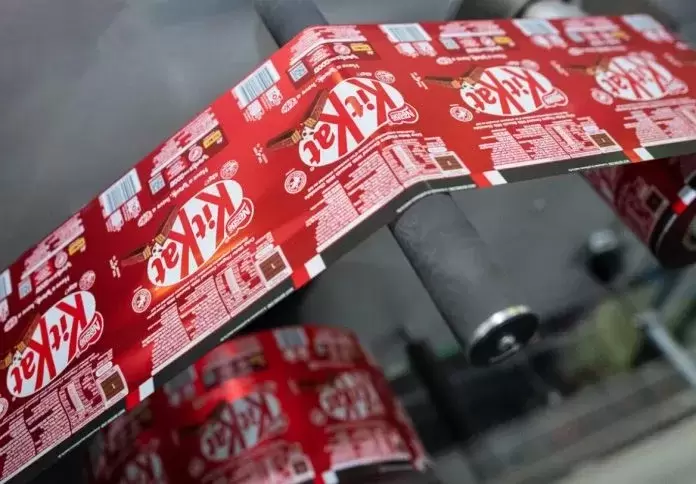
Nestlé, Viva Energy, Taghleef and Amcor produce seven million KitKat wrappers using recycled polypropylene processed through an Australian supply chain.
Australian supply chain produces recycled PP for KitKat
An Australian manufacturing trial has produced recycled polypropylene for use in approximately seven million Nestlé KitKat wrappers, demonstrating how existing domestic industrial infrastructure could support a more circular supply chain for flexible food packaging.
The project involved Viva Energy, Nestlé, Taghleef Industries and Amcor and aimed to test whether recycled plastic feedstock could move through refining, polymer production, film manufacturing and packaging conversion within Australia.
Pyrolysis oil processed at Geelong refinery
Viva Energy processed more than 9.5 tonnes of plastic pyrolysis oil at its Geelong Refinery during the proof-of-concept programme.
The material was used as an alternative feedstock within the refinery before being converted into polypropylene suitable for downstream processing. Viva Energy says Geelong is currently the only Australian site capable of carrying out this type of refining and polypropylene manufacturing at the required scale.
Five tonnes of recycled polypropylene enter packaging chain
Around five tonnes of recycled polypropylene were subsequently processed through a Victorian manufacturing supply chain.
Taghleef Industries and Amcor worked with Nestlé to convert the material into bespoke flexible packaging used for a limited production run of KitKat wrappers in March 2026.
Seven million wrappers demonstrate commercial potential
The trial resulted in approximately seven million KitKat wrappers, moving the concept beyond laboratory testing and into a real consumer packaging application.
Using recycled polypropylene in food-contact flexible packaging is technically demanding because the material must meet strict quality, safety and performance requirements while maintaining compatibility with high-speed converting and packing equipment.
Project builds on earlier KitKat recycling work
The initiative follows a 2022 collaboration between Viva Energy and Nestlé that explored recycled soft plastic content for KitKat 4 Finger packaging.
The latest programme placed greater emphasis on demonstrating whether more of the processing and manufacturing chain could be completed domestically rather than relying on overseas production infrastructure.
Local pyrolysis oil supply remains a limitation
The companies stress that the project was a single production batch rather than an established commercial recycling loop.
The pyrolysis oil used during the trial was imported because Australia does not yet have sufficient domestic supply of suitable material at scale. Building a permanent circular supply chain would therefore require additional collection, sorting and advanced recycling infrastructure.
Existing infrastructure could support circular plastics
Viva Energy argues that the trial demonstrates how existing refinery and polymer production assets could be adapted to process recycled feedstocks rather than relying exclusively on virgin fossil resources.
Using established industrial infrastructure could potentially reduce the capital required to build entirely new polymer manufacturing systems while creating domestic demand for recovered soft plastics.
EPR seen as important for future investment
Nestlé says greater policy certainty will be necessary if projects of this kind are to move from occasional trials into permanent commercial supply chains.
Extended producer responsibility could provide more predictable funding and demand for collection and recycling, improving the investment case for domestic soft plastics processing.
Larger recycling project under consideration
Viva Energy and Cleanaway are continuing a feasibility study into a larger-scale plastics recycling project. The next engineering phase is expected to progress once there is greater clarity around Australia’s future packaging regulation.
The initiative demonstrates the close relationship between packaging policy and manufacturing investment, particularly where advanced recycling technologies require substantial volumes and long-term demand to remain commercially viable.
Food-grade recycled PP remains a strategic challenge
Polypropylene is widely used in flexible food packaging, but creating closed-loop recycled feedstock for contact-sensitive applications remains more difficult than recycling some rigid PET formats.
The KitKat trial shows that technically viable pathways are emerging, but scaling them will depend on collection systems, domestic feedstock supply, regulatory certainty and collaboration across recyclers, polymer producers, film manufacturers, converters and brand owners.






Comments (0)