
Avantium and Klöckner Pentaplast reserve future PEF capacity to develop high-barrier thermoformed food packaging with renewable feedstocks.
Plant-based PEF moves closer to thermoformed food packaging
Avantium and Klöckner Pentaplast have signed a capacity reservation agreement to explore the use of plant-based polyethylene furanoate (PEF) in thermoformed food packaging applications.
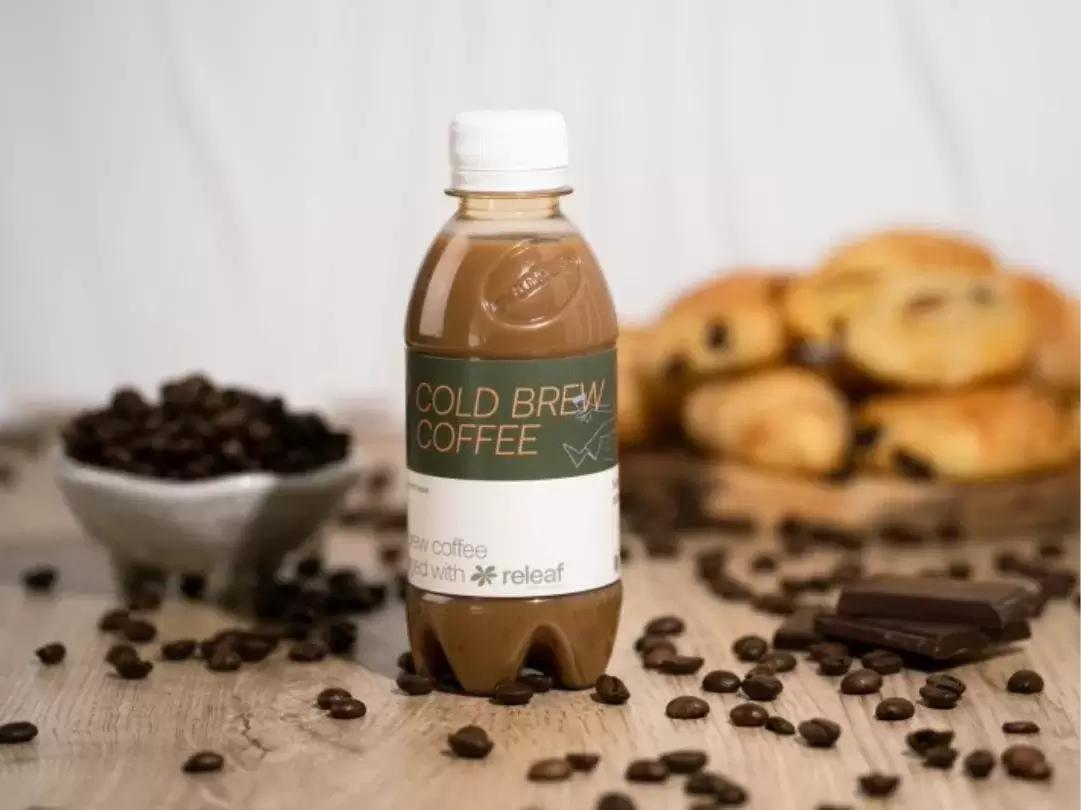
The collaboration will focus on Avantium’s Releaf® polymer for food trays and other packaging formats designed to protect fresh and prepared foods.
The agreement represents a further step towards commercialising PEF in food packaging, combining Avantium’s renewable polymer technology with Klöckner Pentaplast’s expertise in rigid and flexible packaging production.
PEF offers high barrier performance
Releaf® is produced using FDCA, or furandicarboxylic acid, derived from renewable feedstocks. Avantium has developed its YXY® technology to convert plant-based sugars into FDCA, the key building block for PEF.
One of the material’s main attractions for food packaging is its barrier performance. PEF provides strong resistance to oxygen and carbon dioxide, properties that can help protect sensitive food products and extend shelf life.
For fresh and prepared foods, longer shelf life can also contribute to lower food waste by giving products greater protection during storage and distribution.
Thermoformed trays are a new target application
Klöckner Pentaplast will evaluate Releaf® specifically for thermoformed packaging applications, including trays used for fresh and prepared foods.
The company will assess the material’s performance, processability and suitability within its broader packaging innovation programme.
The development could open a new application area for PEF beyond bottles and other rigid formats where the material has already been investigated.
Future capacity is being reserved before commercial scale
Rather than simply signing a research collaboration, kp has reserved access to future volumes of Releaf® from prospective industrial-scale plants using Avantium’s licensed production technology.
The agreement remains conditional on the material meeting technical, regulatory and commercial requirements.
This creates a potential pathway from material development and qualification towards future commercial production once sufficient PEF capacity becomes available.
Avantium is building a licensing-based PEF network
The agreement forms part of Avantium’s strategy to establish a global network of industrial PEF production facilities operated by technology licensees.
The company is also preparing its own FDCA Flagship Plant in Delfzijl, the Netherlands, which is intended to demonstrate industrial-scale production of FDCA for PEF manufacturing.
Recent capacity reservation agreements with other packaging and materials companies indicate growing interest in securing future volumes as the technology moves closer to commercial deployment.
PEF could offer an alternative to complex food packaging structures
One of the potential advantages of PEF is its combination of renewable feedstock and high barrier performance.
In some applications, these properties could allow packaging designers to simplify structures that currently depend on multiple materials or barrier layers to achieve the required protection.
Reducing structural complexity could in turn support recyclability, although the final environmental performance will depend on the complete packaging design and the recycling infrastructure available for the finished format.
Food packaging becomes a key test for renewable polymers
The partnership illustrates how renewable polymers are moving from material development towards application-specific qualification.
For packaging converters, the challenge is not simply whether a polymer is plant-based, but whether it can run reliably through existing processes while delivering the barrier, mechanical and food-contact performance required by customers.
Klöckner Pentaplast’s evaluation will therefore provide an important test of how Releaf® performs in a demanding industrial packaging environment.
Commercialisation depends on performance and supply
PEF still faces the challenge of achieving sufficient production scale and competitive economics before it can become a mainstream packaging material.
The capacity reservation agreement addresses part of this challenge by connecting future supply with a major packaging converter and a defined application area.
If the technical and commercial evaluations are successful, the collaboration could help move plant-based PEF from specialist development projects towards wider use in thermoformed food packaging.







Comments (0)