
Bayer launches a RecyClass-certified mono-PP Talcid blister in Germany, with plans to expand the recyclable pharmaceutical pack across Europe.
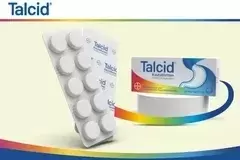
Bayer brings mono-PP blister packaging to Talcid in Germany
Bayer has launched a new polypropylene-based monomaterial blister for its Talcid antacid tablets in Germany, introducing a recyclable packaging structure designed to simplify material recovery while maintaining the functional requirements of pharmaceutical packaging.
The new blister has received RecyClass Design for Recycling certification and represents a further step in Bayer’s broader move towards monomaterial packaging structures.
The German launch follows an earlier introduction of the format in Slovenia in 2025, with Bayer planning to expand the solution to 11 additional European markets during 2026 and 2027.
PP replaces more complex blister structures
Conventional pharmaceutical blisters can combine different polymers, aluminium and other materials to provide the barrier protection required for sensitive medicines.
These multilayer structures can make recycling more difficult because the individual materials cannot always be separated efficiently within existing recycling systems.
Bayer’s new Talcid format uses polypropylene as the principal material architecture, simplifying the structure while retaining the push-through functionality expected from a tablet blister.
RecyClass certification validates the design approach
The blister has been certified according to RecyClass Design for Recycling criteria, providing an independent assessment of its compatibility with relevant recycling processes.
The certification is significant because pharmaceutical packaging must balance recyclability with strict requirements for product protection and safe use.
However, design-for-recycling certification does not mean that every blister will automatically be recycled after use. Bayer notes that actual recycling outcomes depend on the collection, sorting and recycling infrastructure available in individual markets.
Push-through opening remains part of the design
One of the challenges in pharmaceutical packaging redesign is maintaining the familiar interaction required by patients.
The Talcid blister retains a push-through opening mechanism, allowing tablets to be removed individually while the packaging structure is redesigned around a simpler material system.
This combination demonstrates how sustainability improvements can be introduced without requiring consumers to learn an entirely different method of accessing the medicine.
Pharmaceutical packaging requires high barrier performance
Blister packaging must protect medicines from environmental factors such as moisture and oxygen throughout their shelf life.
Any move towards a monomaterial structure therefore has to maintain the barrier performance required by the formulation and comply with pharmaceutical quality standards.
This creates a more demanding design challenge than many conventional consumer packaging applications, where material substitution may be easier to implement.
Germany becomes the next major European market
Germany is Talcid’s largest European market, making it an important step in the rollout of the new packaging format.
Bayer manufactures and supplies Talcid from its Bitterfeld site in Germany, providing an integrated production base for the new packaging solution.
The planned expansion into additional European markets indicates that Bayer is treating the mono-PP blister as a scalable packaging platform rather than a limited market trial.
Monomaterial structures gain ground in healthcare packaging
The development reflects a wider shift towards monomaterial packaging in healthcare and consumer health applications.
Packaging developers are increasingly looking for structures that can combine product protection, consumer functionality and compatibility with future recycling systems.
Blisters are particularly important in this transition because they represent a large-volume packaging format where conventional material combinations have historically been difficult to simplify.
Recyclability must be balanced with medicine protection
The Bayer development illustrates the central challenge facing pharmaceutical packaging: improving circularity without compromising the protection of the product or the safety and convenience of the patient.
As packaging regulation increasingly encourages recyclable and monomaterial structures, pharmaceutical manufacturers will need to demonstrate that alternative designs can meet the same technical and regulatory requirements as established formats.
The Talcid blister provides a commercial example of how this balance can be addressed through material simplification, independent design-for-recycling assessment and gradual expansion across multiple markets.







Comments (0)