
New EU green claims rules prompt Australian bioplastics industry to warn about unsupported compostable packaging claims entering the market.
EU green claims rules expose a regulatory gap for Australian packaging
New European rules restricting generic environmental claims on packaging have prompted the Australasian Bioplastics Association to warn that products unable to use terms such as “eco-friendly” or “biodegradable” in Europe could potentially be marketed in Australia under less restrictive rules.
The issue highlights a growing difference between packaging claims regulation in the European Union and Australia, particularly for compostable products where certification, disposal conditions and consumer communication are closely linked.
The European rules took effect on 27 September 2026 and restrict generic environmental claims unless companies can demonstrate the required level of environmental performance.
Generic environmental claims face tighter controls in Europe
Terms such as “eco-friendly” and “biodegradable” are increasingly subject to scrutiny because they can create broad environmental impressions without explaining the conditions under which a packaging product actually delivers the claimed benefit.
European rules are moving towards claims that are specific, substantiated and linked to recognised environmental performance rather than general statements about sustainability.
For compostable packaging, this distinction is particularly important because compostability depends on the conditions under which the material is collected and processed.
Australia has no equivalent blanket restriction
Australia does not currently have an equivalent blanket prohibition on generic environmental terms.
However, environmental claims remain subject to the Australian Consumer Law, which requires businesses to ensure that sustainability statements are truthful, accurate and supported by reasonable grounds.
The Australian Competition and Consumer Commission has also warned businesses that vague terms such as “green”, “environmentally friendly” and “sustainable” can create misleading impressions when they are not adequately supported.
ABA warns about a potential claims gap
The Australasian Bioplastics Association is concerned that differences between the two regulatory systems could create an incentive for suppliers to redirect products towards Australia when similar environmental claims become more difficult to use in Europe.
ABA chief executive Martine Poulain has argued that Australia needs stronger alignment with international approaches to environmental claims in order to prevent unsupported sustainability messaging from becoming more widespread.
The concern extends beyond marketing language because consumers may use environmental claims to decide how packaging should be disposed of.
Compostable labels can influence disposal behaviour
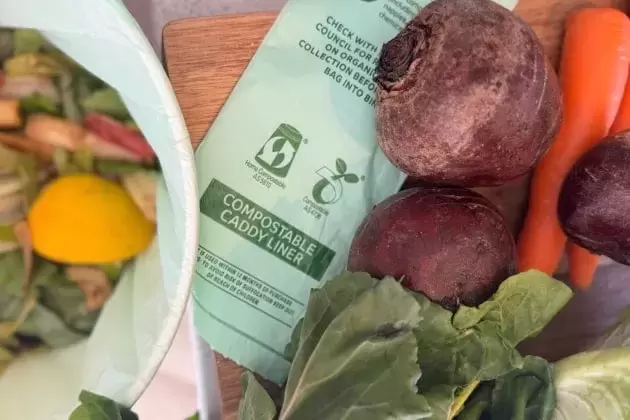
A packaging product labelled “biodegradable” or “compostable” may be placed by consumers into food and garden organics collections even when the material is not accepted by the relevant composting facility.
This can introduce unsuitable materials into organic waste streams and potentially contaminate composting outputs.
The ABA therefore recommends that businesses verify both the certification status of compostable packaging and whether the relevant local collection service accepts that type of product.
Australian standards provide a more specific benchmark
The ABA recommends that buyers look for certification against AS 4736 for commercially compostable products or AS 5810 for home-compostable products.
Certified products should carry the relevant certification logo and licence number, allowing purchasers to verify the claim through the appropriate certification register.
European compostability certification does not automatically establish compliance with Australian standards, which can include different testing requirements.
Certification is becoming more important than generic language
The development reinforces a broader change in sustainable packaging communication.
Rather than relying on broad claims about environmental benefits, brands and packaging suppliers increasingly need to demonstrate specific properties through recognised standards, testing and certification.
This is particularly important for compostable packaging because the environmental benefit depends not only on material composition but also on collection, treatment and disposal conditions.
Regulatory fragmentation creates challenges for global packaging suppliers
Companies selling compostable packaging across multiple markets may increasingly need to manage different certification and claim requirements.
A product that qualifies for a particular environmental claim in one jurisdiction may require different evidence, wording or certification in another.
This creates additional compliance requirements for global packaging suppliers and increases the importance of maintaining detailed documentation for each market.
Australia faces a wider packaging policy transition
The debate over environmental claims comes as Australia reviews its broader packaging regulatory framework.
Federal, state and territory governments have recently agreed to continue working together on packaging regulation, including efforts to harmonise approaches to problematic packaging and improve recycling outcomes.
Greater consistency between environmental claims, packaging standards and waste-management systems could help reduce confusion for businesses and consumers.
Packaging claims increasingly need evidence
The Australian debate demonstrates that the future of sustainable packaging communication will depend increasingly on evidence rather than broad environmental language.
For compostable products, that means identifying the applicable standard, specifying whether composting is industrial or domestic, and ensuring that the relevant collection and processing infrastructure exists.
As regulatory scrutiny increases across major markets, packaging companies will need to treat environmental claims as a compliance issue as well as a marketing decision.









Comments (0)