
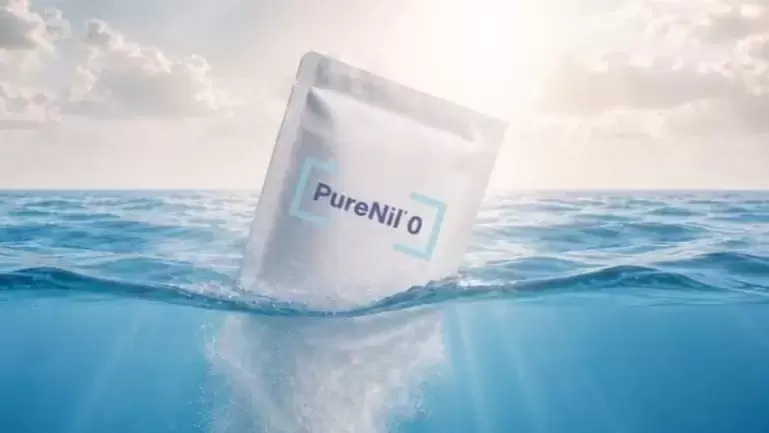
Lactips and SmartSolve formalise a global partnership to scale PureNil 0, a plastic-free, water-dispersible packaging substrate.
Plastic-free packaging moves from development to commercial scale
Lactips and SmartSolve Industries have formalised a global strategic partnership to accelerate the development and commercialisation of plastic-free packaging materials, following the successful scale-up of their PureNil 0 platform.
The two companies began collaborating in 2024 and have taken the material from early-stage development to commercial scale in less than two years.
The partnership now extends beyond the current material, with both companies establishing a longer-term innovation programme focused on new generations of bio-based and plastic-free packaging.
PureNil 0 combines paper with natural polymer technology
PureNil 0 is a flexible packaging substrate combining a bio-based functionalised paper developed by SmartSolve with Lactips’ natural polymer resin technology.
The companies describe the material as 100% plastic-free, water-soluble, biodegradable and dispersible in water without leaving microplastic residues.
The combination is intended to provide the functionality required for flexible packaging while avoiding conventional fossil-based plastic structures.
Water dispersibility creates a different end-of-life pathway
Unlike conventional flexible packaging, which normally remains intact after disposal until it enters a suitable recycling or treatment system, PureNil 0 is designed to disperse rapidly when exposed to water.
This characteristic is particularly relevant for applications where packaging can be intentionally dissolved or dispersed after use.
The companies are positioning the technology as a potential alternative to selected single-use packaging formats where conventional plastic creates persistent waste.
Material is suitable for direct food contact
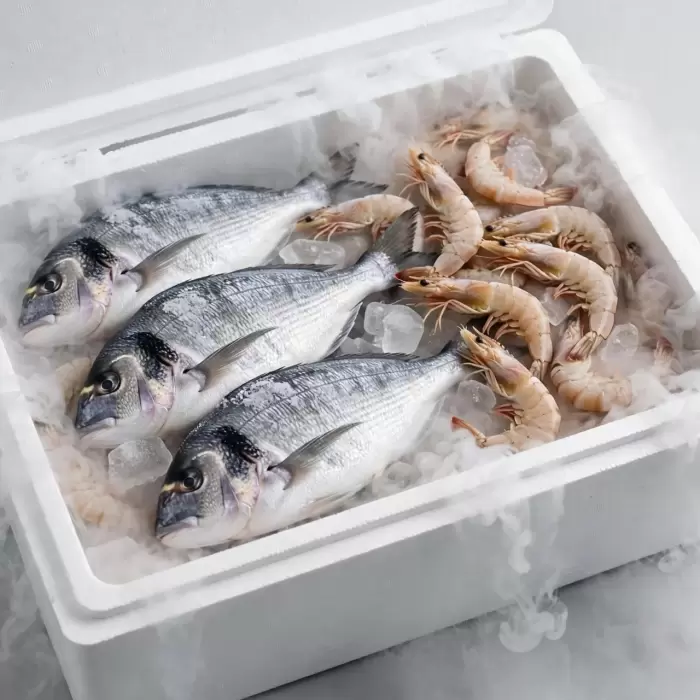
PureNil 0 has been approved for direct food-contact applications, expanding its potential beyond cosmetics and personal care into food and beverage packaging.
The companies say the material is already being used by customers across beauty, personal care, food and beverage markets.
This commercial adoption is significant because food-contact packaging introduces additional requirements around material safety, processing, barrier performance and regulatory compliance.
Printing capability expands packaging applications
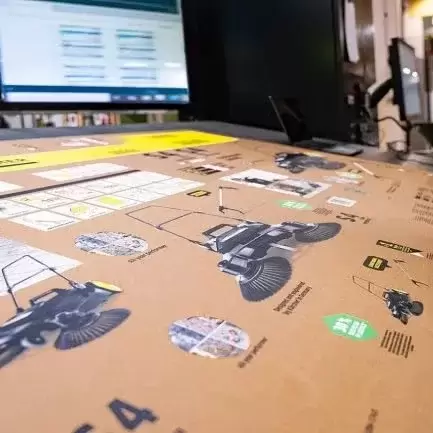
The substrate is also designed to be printable, allowing brands to add graphics and product information without requiring a separate conventional plastic film.
Printability is an important requirement for flexible packaging because the material must function not only as a protective substrate but also as a communication surface for branding, instructions and regulatory information.
The combination of flexibility and printability allows the platform to target a wider range of packaging applications than rigid dissolvable formats.
Partnership moves beyond a single material
The formal agreement establishes a joint innovation roadmap extending beyond PureNil 0.
Lactips contributes its expertise in bio-based, water-soluble and biodegradable natural polymers, while SmartSolve provides its technology for functionalised paper-based packaging substrates.
Combining these capabilities could allow the companies to develop materials with different dissolution rates, mechanical properties and functional characteristics for specific packaging applications.
Commercial scale remains the critical milestone
The transition from laboratory development to commercial production is one of the biggest challenges facing emerging sustainable packaging materials.
PureNil 0 provides an early example of a plastic-free structure progressing through development, qualification and customer adoption in a relatively short period.
The next challenge will be demonstrating that the platform can achieve consistent performance and competitive economics as volumes increase.
Plastic-free packaging targets selected single-use applications
The companies are not positioning water-soluble materials as a universal replacement for conventional plastics.
Instead, the technology is aimed at applications where the functional benefits of water dispersibility and biodegradability can outweigh the performance advantages of persistent plastic structures.
This application-specific approach could allow plastic-free materials to enter markets where conventional paper alone cannot provide the required combination of flexibility, functionality and end-of-life performance.
Natural polymers could enable new packaging architectures
The Lactips and SmartSolve partnership illustrates how the next generation of sustainable packaging may depend on combining different bio-based technologies rather than simply replacing plastic with paper.
By combining functionalised fibre with natural polymer chemistry, the companies are developing packaging architectures designed around a fundamentally different end-of-life behaviour.
If the platform continues to scale commercially, it could provide another pathway for reducing persistent plastic in selected single-use packaging applications.





Comments (0)