
Camera-controlled laser micro-perforation enables precise food packaging ventilation, helping control gas exchange, moisture and shelf life.
Laser micro-perforation gains precision through camera control
Laser micro-perforation technology is becoming more precise through the integration of camera-based control systems, giving food packaging manufacturers greater control over the microscopic openings used to manage gas exchange and moisture.
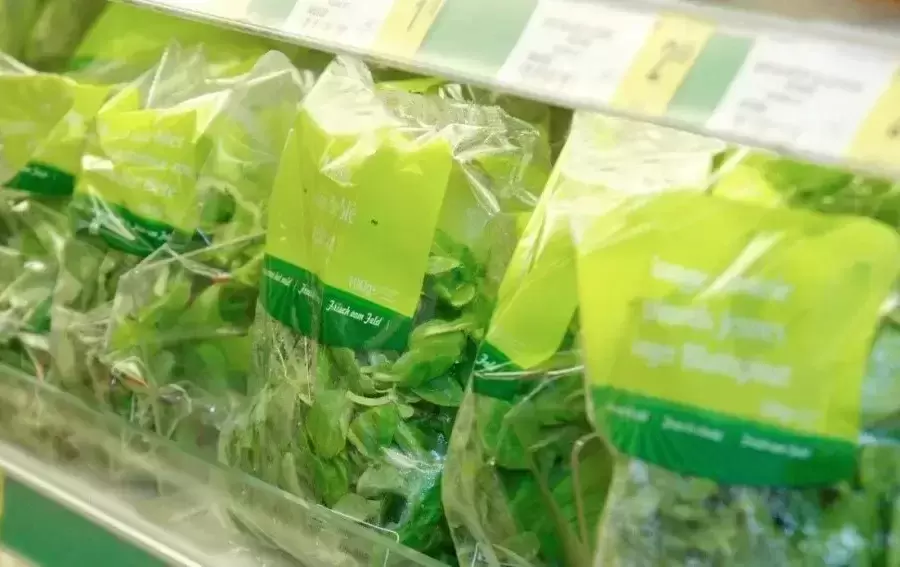
The technology is particularly relevant to fresh produce and other food products where packaging must create a carefully controlled internal atmosphere while maintaining protection against external contamination.
Combining laser processing with machine vision allows manufacturers to monitor perforation quality in real time and maintain greater consistency across the packaging web.
Micro-perforations control the package atmosphere
Fresh foods continue to respire after harvesting, consuming oxygen and producing carbon dioxide and water vapour.
If these gases accumulate inside a sealed package, product quality can deteriorate rapidly. If ventilation is excessive, however, the package may fail to maintain the atmospheric conditions needed to slow respiration.
Micro-perforated films provide a way to balance these competing requirements by creating controlled pathways for gas and moisture exchange.
Laser creates highly controlled openings
Unlike mechanical perforation systems, lasers can create very small openings with high positional accuracy.
The process can be adjusted according to the required diameter, spacing and distribution of the perforations, allowing packaging structures to be tailored to individual products.
This is particularly useful for fresh produce, where different fruits and vegetables have significantly different respiration rates and therefore require different packaging conditions.
Camera systems improve process consistency
The integration of camera technology adds an additional layer of quality control to the perforation process.
Vision systems can inspect the position and characteristics of individual perforations, identifying deviations that may affect package performance.
This allows manufacturers to detect process variations earlier and maintain more consistent packaging quality across long production runs.
Packaging can be adapted to specific products
One of the advantages of digitally controlled laser perforation is the ability to modify the perforation pattern according to the product being packaged.
A film intended for leafy vegetables, berries or other fresh produce can therefore use different perforation parameters to create the appropriate balance of oxygen, carbon dioxide and humidity.
This application-specific approach can help packaging manufacturers optimise shelf life rather than relying on a single standard perforation pattern.
Shelf life depends on more than the film barrier
The performance of fresh food packaging depends on the interaction between the film's barrier properties, perforation pattern, product respiration rate, temperature and storage conditions.
Precise micro-perforation therefore becomes part of a broader packaging system rather than simply a decorative or structural feature.
By controlling the openings more accurately, manufacturers can potentially reduce variability between packages and improve the consistency of product performance throughout distribution and retail.
Laser processing reduces mechanical contact
Laser technology also offers advantages over some mechanical perforation systems because the process does not require physical perforation tools to contact the film.
This can reduce tool wear and allow manufacturers to produce smaller and more complex perforation patterns.
Digital control can also make changeovers between packaging specifications faster, particularly where multiple products are manufactured on the same production line.
Vision and laser technology move together
The combination of laser processing and machine vision reflects a wider trend towards closed-loop quality control in packaging production.
Rather than treating inspection as a separate final-stage activity, manufacturers are increasingly integrating cameras and automated analysis directly into production processes.
This allows defects to be detected closer to the point where they are created and can reduce material waste and rejected packaging.
Precision packaging supports food waste reduction
For fresh produce, even small improvements in shelf-life consistency can have significant consequences across the supply chain.
Packaging that maintains the appropriate atmosphere for longer can reduce premature deterioration, improve stock rotation and potentially decrease the amount of food discarded before consumption.
The development of camera-controlled laser micro-perforation therefore illustrates how increasingly precise packaging technologies can contribute not only to manufacturing efficiency but also to food quality and waste reduction.









Comments (0)