
Marine insurers warn that non-compliant wood packaging can cause cargo delays, inspections and additional costs across international supply chains.
Wood packaging compliance becomes a supply chain issue
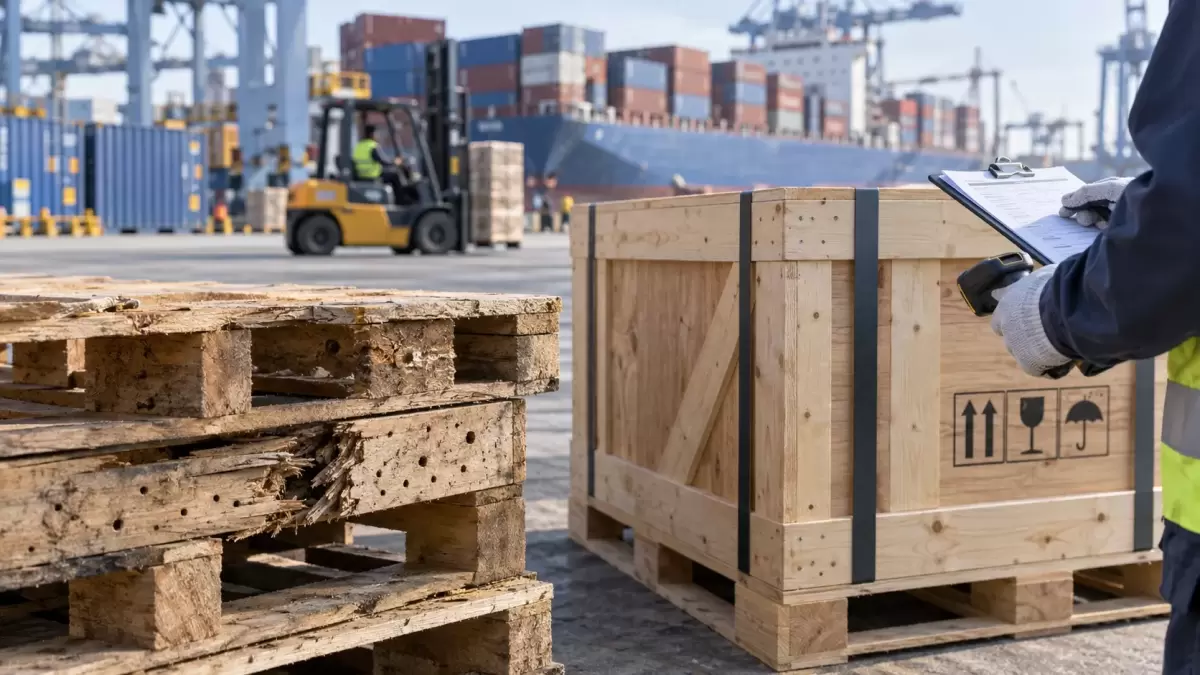
Non-compliant wood packaging is creating avoidable disruption across international supply chains, with marine insurance experts warning that pallets, crates, cases and other wooden packing materials can trigger inspections, delays and additional costs when phytosanitary requirements are not met.
The issue is particularly relevant to companies moving goods across borders, where packaging itself can become a point of intervention even when the products being transported fully comply with import requirements.
International standards for wood packaging are designed to prevent the movement of pests and diseases through global trade, making compliance an important part of logistics planning.
ISPM 15 governs international wood packaging
The International Standard for Phytosanitary Measures No. 15, commonly known as ISPM 15, establishes requirements for wood packaging material used in international trade.
The standard covers materials such as pallets, crates, dunnage and wooden cases and requires approved treatment designed to eliminate organisms that could be transported between countries.
Compliant packaging is generally identified through the internationally recognised ISPM 15 mark, allowing authorities to verify that the material has undergone an approved treatment.
Packaging can stop an otherwise compliant shipment
One of the challenges highlighted by marine insurers is that packaging compliance is sometimes treated as a secondary logistics issue rather than as part of the shipment's overall regulatory requirements.
A consignment can therefore arrive with all necessary product documentation while still being delayed because its wooden pallets or other packing materials do not meet the destination country's requirements.
Depending on the jurisdiction and circumstances, authorities may require treatment, destruction or re-export of non-compliant wood packaging.
Delays can extend beyond the packaging itself
The consequences of non-compliant wood packaging can extend throughout the logistics chain.
Inspections and quarantine procedures can delay cargo release, while replacement packaging may need to be sourced locally before goods can continue to their destination.
For time-sensitive products, these interruptions can create additional storage, handling and transport costs and potentially disrupt customer delivery schedules.
Supply chain planning needs to include packaging
The issue demonstrates why packaging specifications need to be integrated into international logistics planning rather than treated solely as a warehouse or procurement responsibility.
Companies shipping goods internationally need to know which packaging materials are being used, where they originate, how they have been treated and whether the packaging carries the required certification marks.
This becomes particularly important when pallets or crates are sourced locally at different points in the supply chain.
Alternative materials can reduce compliance complexity
Companies may also consider alternatives to solid wood where product and logistics requirements allow.
Plastic pallets, engineered wood products and other packaging systems can reduce exposure to some phytosanitary requirements, although their suitability depends on load requirements, destination regulations, cost and sustainability considerations.
The objective is not necessarily to eliminate wood packaging, but to ensure that the material selected is appropriate for the complete logistics route.
Packaging documentation becomes increasingly important
As global supply chains become more complex, packaging information is increasingly becoming part of shipment compliance data.
Maintaining records of treatment, suppliers and packaging specifications can help companies demonstrate compliance and respond more quickly when authorities raise questions about a shipment.
This is particularly valuable for businesses operating across multiple markets where phytosanitary enforcement practices can differ.
Wood packaging remains essential to global trade
Wooden pallets and crates remain widely used because they offer a combination of strength, availability, repairability and relatively low cost.
The continued importance of these formats means that phytosanitary compliance will remain a practical issue for manufacturers, exporters, logistics providers and packaging suppliers.
For companies operating international supply chains, the lesson is straightforward: packaging is part of the shipment's regulatory footprint. Ensuring that wooden packaging meets the applicable requirements before goods leave the origin country can prevent disruptions that would otherwise be entirely avoidable.











Comments (0)