
Packaging companies are developing new strategies to overcome PCR challenges including odor, color variation and consumer acceptance.
PCR adoption faces challenges beyond material availability
Increasing the use of post-consumer recycled (PCR) plastic in packaging is becoming a major industry priority, but brands and converters are discovering that replacing virgin resin involves challenges beyond supply and cost.
Odour, colour variation and consumer perception are emerging as some of the most significant barriers to wider PCR adoption, particularly in packaging applications where appearance and sensory expectations are closely linked to product quality.
Packaging companies and consumer brands are therefore developing new strategies to integrate recycled content without compromising performance or brand identity.
Odour remains a major technical challenge
One of the most persistent issues with PCR is residual odour caused by previous product use.
Recycled polyolefins can absorb fragrances and chemicals from products such as detergents, personal care items and household goods. During recycling, these residues can become noticeable again when the material is processed at high temperatures.
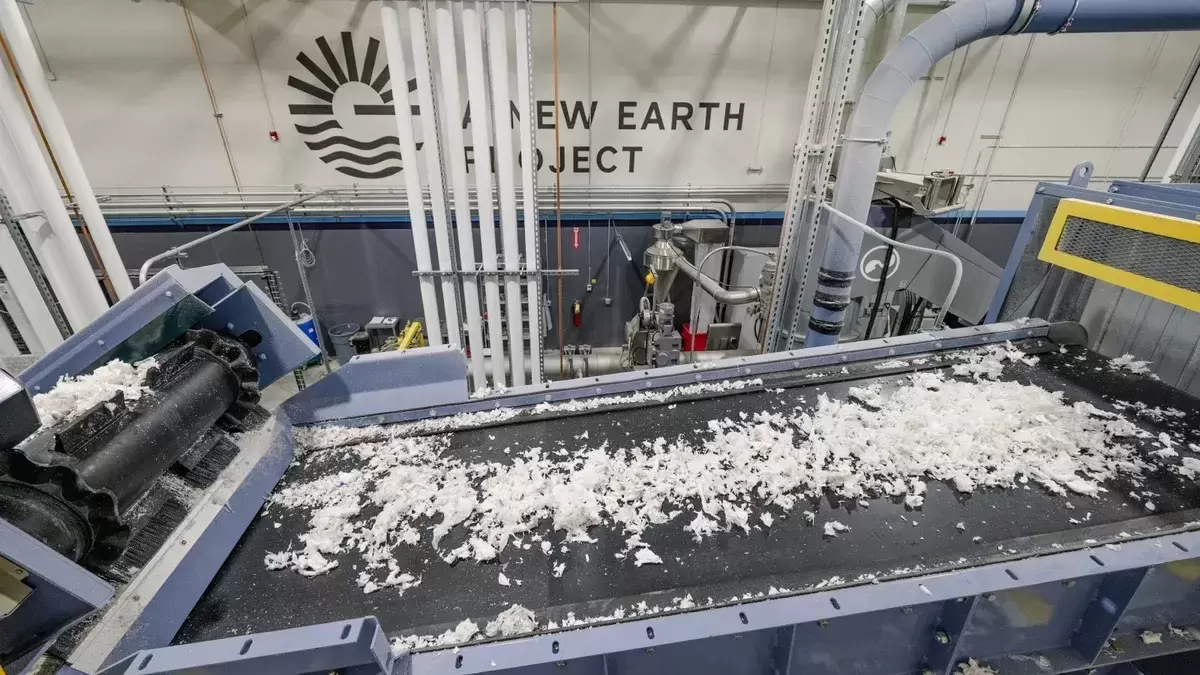
Advanced washing, filtration and deodorisation technologies can reduce these effects, but eliminating odour completely remains challenging, particularly for sensitive applications.
Pet food packaging highlights sensory limitations
The sensitivity of animals to smell has created additional challenges in some pet food applications.
Packaging manufacturers have found that dogs and cats can detect residual odours from PCR materials more easily than humans, which may affect acceptance of products.
For this reason, some companies have initially focused PCR adoption on secondary and tertiary packaging, where direct product interaction is not required.
Colour consistency influences consumer perception
Colour variation is another major obstacle when replacing virgin plastic with recycled resin.
PCR often produces darker or less uniform colours because the material originates from multiple previous applications and recycling streams.
Although these differences do not necessarily affect packaging performance, they can influence consumer expectations, especially in categories where clean, bright or transparent packaging is associated with quality.
Brands rethink design to embrace recycled materials
Some companies are responding by adapting packaging design rather than attempting to make PCR look identical to virgin plastic.
Dark-coloured packaging, intentional textures and alternative visual identities can help integrate recycled content as part of the product story instead of hiding material variation.
One example is a Pizza Hut chicken wing bowl developed with Anchor Packaging, where a charcoal-coloured polypropylene structure incorporated recycled content while maintaining recyclability.
Packaging applications determine PCR feasibility
Not all packaging categories face the same challenges when adopting PCR.
Secondary packaging, transport films and industrial applications often allow greater flexibility because consumers do not directly evaluate the appearance of the material.
Primary packaging for food, personal care and premium consumer goods requires stricter control over odour, colour and regulatory compliance.
Innovation is expanding PCR opportunities
Converters and brands are exploring several approaches to increase recycled content, including multilayer structures, PCR in specific package components and designs that mask natural material variation.
These strategies can help companies increase PCR use while maintaining product protection and consumer acceptance.
PCR moves from sustainability goal to engineering challenge
The growth of recycled-content packaging depends not only on increasing recycling capacity but also on solving the practical challenges that appear when recycled materials enter demanding applications.
As regulations and brand commitments increase demand for PCR, packaging developers are increasingly treating odour management, colour control and sensory performance as critical design parameters.
The future of recycled packaging will therefore depend on combining better recycling technologies with packaging designs that are developed around the realities of circular materials.






Comments (0)