
Paranova and AMFresh launch one million fibre-based punnets for grapes, expanding a heat-sealed format developed for fresh produce.
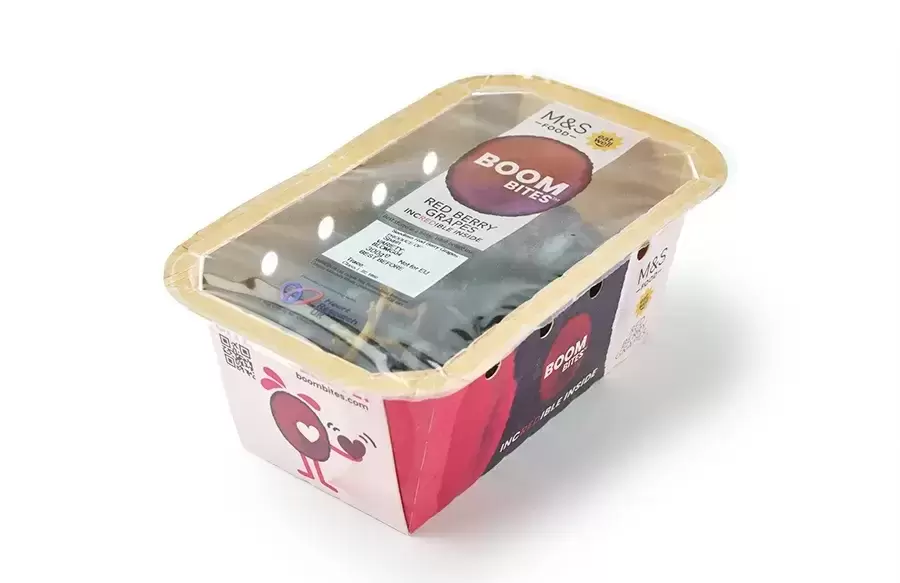
Fibre-based punnets move into large-scale grape packaging
Packaging manufacturer Paranova and fresh produce supplier AMFresh are scaling a fibre-based punnet solution for grapes, with around one million FibreFresh HeatSeal punnets produced for the launch of the BOOMBITES grape range.
The project expands the FibreFresh HeatSeal format beyond its initial application in tomatoes, demonstrating how fibre-based packaging can be adapted to different fresh produce categories while maintaining compatibility with automated packing operations.
The move comes as fresh produce brands and retailers continue to seek alternatives to conventional plastic punnets without compromising product protection, shelf life or production efficiency.
Freshness management is central to the design
Fresh produce packaging must perform a particularly delicate balancing act. The package needs to protect the product from physical damage while allowing sufficient exchange of gases and moisture to prevent premature deterioration.
The FibreFresh HeatSeal punnet has been engineered around these requirements, with the structure designed to support respiration and transpiration management for fresh produce.
This is particularly important for grapes and other products where excessive moisture accumulation can accelerate quality loss during distribution and retail display.
Format designed for existing packing lines
One of the main challenges when introducing alternative packaging materials is ensuring that the new format can be processed efficiently on existing production equipment.
Paranova says the FibreFresh HeatSeal punnet offers machinability and compatibility with existing packing lines, allowing producers to introduce the fibre-based format without fundamentally changing their packing operations.
This can lower the barrier to adoption compared with sustainable packaging concepts requiring entirely new machinery or manual handling.
From tomatoes to grapes
The BOOMBITES launch follows the introduction of the FibreFresh HeatSeal punnet for tomatoes, providing an early commercial application for the format.
Moving into grapes demonstrates the potential for the same packaging architecture to be adapted to different produce characteristics and retail requirements.
The ability to use one packaging platform across multiple categories could also help converters achieve greater production scale and improve the commercial case for fibre-based alternatives.
Nearly one million packs mark a commercial milestone
Producing around one million punnets for a single product launch represents a significant step beyond pilot-scale packaging development.
Large production runs provide an opportunity to test sustainable packaging under real-world conditions, including automated packing, transport, retail handling and extended shelf display.
Performance at this scale can also provide manufacturers and retailers with more reliable data on material efficiency, production speed and product quality.
Fibre competes with established plastic formats
Plastic punnets remain widely used across fresh produce because they combine low weight, transparency and structural strength with efficient automated handling.
Fibre-based alternatives therefore need to offer more than a different material composition. They must also provide sufficient rigidity, product visibility, sealing performance and protection throughout the supply chain.
The FibreFresh approach illustrates how the transition away from conventional plastic packaging increasingly depends on engineering the alternative around the complete application rather than simply replacing the substrate.
Application-specific packaging gains momentum
The project also reflects a broader shift towards packaging solutions designed around the particular requirements of each fresh produce category.
Grapes, tomatoes, berries and leafy vegetables have different respiration, moisture and handling requirements, meaning that a universal packaging format may not provide the optimum balance between product protection and material efficiency.
As fibre-based packaging develops, the ability to adapt structures to individual applications could become an important factor in replacing conventional plastic formats at commercial scale.







Comments (0)