
PET remains a lightweight packaging material with carbon advantages, but recycling quality and circular systems will define its future.
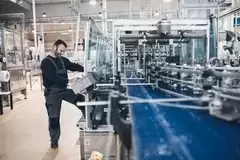
PET remains central to packaging decarbonization debate
The packaging industry is exploring multiple pathways to reduce carbon emissions, from renewable materials and recycled content to improved recycling systems and lower-energy production processes.
Within this transition, polyethylene terephthalate (PET) remains one of the most widely discussed materials because it combines lightweight performance, established recycling infrastructure and strong product protection.
However, its future role in sustainable packaging will depend on how effectively the industry can move from linear consumption towards circular material systems.
Lightweighting gives PET a carbon advantage
One of PET’s strongest sustainability arguments is its material efficiency.
PET bottles and containers can provide high mechanical strength while using relatively small amounts of material compared with many alternative packaging formats.
The lower weight of PET also reduces transport impacts, allowing more products to be moved with less fuel consumption throughout distribution networks.
For high-volume beverage and food applications, these efficiency gains can significantly influence the overall carbon footprint of packaging systems.
Recycled PET changes the material equation
The use of recycled PET (rPET) is a key strategy for reducing emissions associated with packaging production.
By replacing virgin polymer with post-consumer recycled material, manufacturers can reduce dependence on fossil-based feedstocks while keeping PET within a circular system.
Closed-loop bottle-to-bottle recycling is particularly valuable because it allows recovered PET to return to demanding packaging applications rather than being downgraded into lower-value uses.
Collection quality determines circularity performance
The environmental benefits of rPET depend heavily on the quality and availability of collected material.
Efficient collection, sorting and cleaning systems are essential to produce recycled PET suitable for food-contact packaging.
Without sufficient quantities of high-quality feedstock, demand for recycled content can exceed supply, limiting the ability of brands and converters to increase recycled material use.
Energy transition remains essential
Reducing the carbon footprint of PET packaging also requires changes beyond the material itself.
Manufacturing processes, recycling plants and supply chains all contribute to the overall emissions profile of packaging.
Increasing the use of renewable energy in production and recycling operations can further reduce the environmental impact of PET systems.
PET faces criticism over plastic pollution
Despite its technical advantages, PET remains part of the wider debate around plastic pollution and waste management.
Incorrect disposal, insufficient collection systems and leakage into the environment can undermine the benefits of recyclable packaging materials.
This means that recyclability alone is not enough. Packaging systems must ensure that collected materials actually return into productive use.
Design choices influence future recycling
The future performance of PET packaging will also depend on packaging design.
Labels, closures, additives and colours can influence sorting efficiency and recycled material quality.
Design approaches that simplify packaging structures and improve compatibility with recycling systems can help increase the amount of PET recovered for high-value applications.
Decarbonization requires system-level thinking
The debate around PET illustrates a broader challenge facing the packaging industry.
No material delivers sustainability benefits in isolation. The environmental performance of packaging depends on material selection, manufacturing, logistics, consumer behaviour, collection systems and recycling infrastructure.
PET’s future role will therefore depend not only on its properties as a polymer, but on whether industry can build the circular systems required to maximise its value.
The next phase of PET will be defined by circularity
As regulations increase recycled-content requirements and brands pursue carbon reduction targets, PET is likely to remain an important packaging material.
The challenge will be ensuring that its advantages in lightweighting and recyclability are supported by effective collection, high-quality recycling and lower-carbon production.
The future of PET packaging will ultimately depend less on defending or replacing the material and more on improving the system that surrounds it.






Comments (0)