
Researchers develop a biodegradable starch-based sensor that changes colour with humidity, opening new possibilities for smart food packaging.
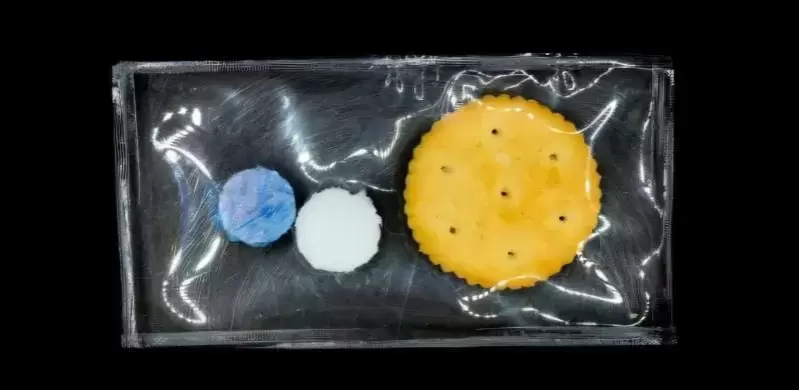
Starch-based sensor brings biodegradable intelligence to food packaging
Researchers have developed a biodegradable humidity sensor based on starch that could provide a simple visual indication of moisture changes inside food packaging.
The technology aims to combine the sustainability benefits of plant-based materials with the functionality of smart packaging, allowing consumers and supply-chain operators to better understand changing product conditions.
Unlike conventional electronic sensors, the starch-based system relies on material changes that can be observed visually, potentially reducing complexity and cost.
Humidity monitoring helps protect food quality
Moisture plays a critical role in food packaging performance.
Excess humidity can accelerate spoilage, affect texture, encourage microbial growth and reduce the shelf life of many products.
Being able to monitor moisture conditions inside a package could help identify problems earlier and provide additional information beyond traditional expiry dates.
Starch provides a biodegradable sensor platform
The researchers used starch as the foundation of the sensor because it is renewable, widely available and capable of forming biodegradable films.
Starch-based materials are already being investigated for sustainable packaging applications, although their sensitivity to moisture has traditionally been considered a limitation.
In this case, that same interaction with water becomes useful by allowing the material to respond to humidity changes.
Colour change provides a simple visual signal
The sensor works by changing appearance when exposed to different moisture conditions.
This creates a visible indicator that could allow users to identify changes in the internal packaging environment without requiring electronic readers or external equipment.
Simple visual indicators can be particularly valuable for food packaging because they allow information to be communicated directly through the package itself.
Smart packaging moves towards simpler systems
Many current smart packaging technologies rely on electronic components such as RFID tags, sensors, batteries or connected platforms.
While these technologies provide advanced functionality, they can also increase cost, complexity and end-of-life challenges.
Material-based sensors offer a different approach by integrating intelligence directly into the packaging structure.
Biodegradable sensors could support sustainable packaging
The development reflects a broader effort to create smart packaging solutions that do not introduce additional difficult-to-recycle components.
A biodegradable indicator based on renewable materials could potentially provide functionality while remaining aligned with more circular packaging strategies.
However, the complete packaging system would still need to consider factors such as barrier performance, food-contact safety and end-of-life management.
Food waste reduction is a major opportunity
Smart packaging technologies are increasingly being explored as tools to reduce food waste.
By providing more information about actual product conditions, sensors could help consumers, retailers and logistics operators make better decisions about storage, distribution and consumption.
Humidity monitoring is particularly relevant for products where moisture changes directly influence quality.
Commercial adoption requires further development
The starch-based sensor remains at a research stage and further validation will be needed before commercial packaging applications become possible.
Future work will need to evaluate durability, accuracy, food-contact compliance, manufacturing scalability and integration with existing packaging processes.
The researchers will also need to demonstrate that the sensor performs reliably throughout the product lifecycle under real storage and transport conditions.
Materials could become the next generation of smart packaging
The development illustrates a growing trend where packaging intelligence is created through advanced materials rather than additional electronic components.
Combining biodegradable substrates with responsive functions could open new opportunities for sustainable smart packaging.
If successfully scaled, starch-based sensors could provide a low-complexity route to adding freshness and quality information directly into food packaging systems.








Comments (0)