
Combining superchilling with heat-shrink packaging could extend chicken shelf life by controlling temperature, oxygen and moisture.
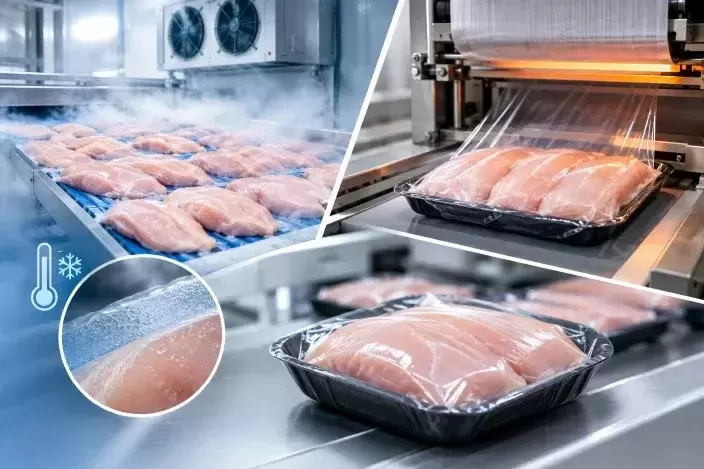
Superchilling and shrink packaging combine to extend chicken shelf life
A combination of superchilling and heat-shrink packaging is emerging as a potential route to extending the shelf life of fresh chicken while maintaining product quality and reducing reliance on chemical preservatives.
The approach combines tighter temperature control with packaging designed to create a close barrier around the meat, addressing several factors that can contribute to quality deterioration during storage and distribution.
For poultry producers and retailers, extending shelf life can reduce food waste while providing greater flexibility across increasingly complex refrigerated supply chains.
Superchilling slows quality deterioration
Superchilling involves cooling meat to temperatures below conventional chilled storage while avoiding complete freezing of the product.
The technique reduces microbial growth and slows biochemical reactions that contribute to quality deterioration, potentially extending the period during which fresh chicken can be stored and distributed.
Unlike conventional freezing, superchilling is intended to preserve the characteristics of chilled meat while providing some of the storage benefits associated with lower temperatures.
Packaging controls the product environment
Temperature control alone cannot eliminate all of the factors that influence poultry shelf life.
Moisture migration, oxidation, oxygen exposure and package leakage can continue to affect meat quality even under controlled refrigeration.
This is where packaging becomes an important part of the preservation system, creating a physical barrier between the product and its surrounding environment.
Heat-shrink film reduces excess package volume
Heat-shrink packaging uses a film that contracts around the product after heating, creating a close-fitting package with limited excess space.
The tighter structure can reduce the amount of air surrounding the meat and provide a more consistent barrier around irregularly shaped portions.
Close conformity to the product can also improve package presentation while reducing unnecessary packaging volume.
Oxygen control helps limit oxidation
Exposure to oxygen can contribute to oxidation and changes in the colour and quality of poultry meat.
A tightly sealed shrink package can help limit oxygen exchange when combined with an appropriate barrier film and sealing process.
Maintaining package integrity throughout transport and storage is therefore critical to achieving the expected shelf-life benefits.
Moisture management remains important
Fresh chicken can release liquid during refrigerated storage, creating challenges for both product appearance and packaging performance.
Excess moisture can also influence microbial growth and weaken some packaging structures if the barrier and sealing system are not properly designed.
Combining superchilling with a closely fitting shrink film can help create a more stable environment around the product, although performance depends on the specific film, process and storage conditions.
Longer shelf life could reduce food waste
Extending the usable life of fresh poultry can have an important impact beyond the packaging itself.
Products that remain within acceptable quality limits for longer can provide retailers with greater flexibility in stock rotation and reduce the quantity of food discarded before sale.
Longer shelf life can also support longer distribution routes and reduce pressure on supply chains where production and consumption are geographically separated.
Packaging and temperature need to be designed together
The approach demonstrates why food packaging performance cannot always be evaluated independently from processing and storage conditions.
The same packaging structure may perform differently depending on the temperature history of the product, the amount of oxygen present, the sealing conditions and the duration of refrigerated storage.
For this reason, combining preservation technology with packaging design can provide a more effective route to shelf-life optimisation than changing either element in isolation.
Integrated preservation could support more efficient poultry supply chains
The combination of superchilling and heat-shrink packaging reflects a broader trend towards integrated food preservation systems.
Rather than relying on a single intervention, producers can combine temperature management, packaging barriers and controlled processing conditions to protect food quality throughout the supply chain.
For poultry packaging, these approaches could help balance product quality, logistics flexibility and food-waste reduction while maintaining the characteristics expected from fresh chilled meat.






Comments (0)