
Tageos introduces microwave-compatible RAIN RFID inlays designed for ready meals and food packaging requiring traceability after heating.
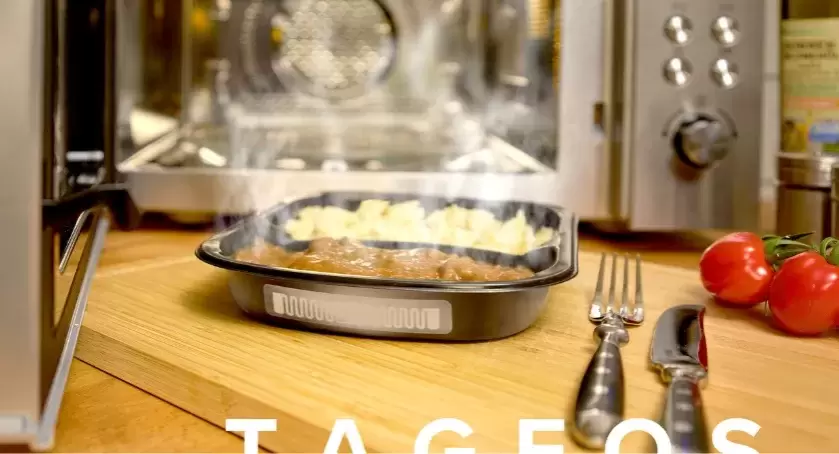
Tageos develops RFID inlays for microwave-ready food packaging
Tageos has introduced a new generation of RAIN RFID inlays designed specifically for microwave-compatible food packaging, enabling traceability and digital identification for products that are heated before consumption.
The new EOS-450 MW M830 and EOS-450 MW UX inlays are designed for applications including ready meals, convenience food and quick-service restaurant packaging, where traditional RFID solutions can face performance limitations during microwave use.
The launch expands the role of smart packaging by combining product identification, supply-chain visibility and consumer convenience within food formats designed for direct heating.
Microwave environments create RFID challenges
RFID performance can be affected when tags are integrated into food packaging intended for microwave preparation.
The electromagnetic environment inside and around microwaveable packs can interfere with antenna performance, reducing reading reliability and limiting the use of RFID in these applications.
Tageos developed the EOS-450 MW family to address these challenges while maintaining the small form factor required for modern food labels and packaging formats.
Designed for ready meals and food retail applications
The new inlays target categories where packaging increasingly requires both physical functionality and digital connectivity.
Ready meals, chilled foods and convenience products depend on accurate inventory control, efficient logistics and reliable product identification throughout the supply chain.
By enabling RFID functionality in microwave-compatible packs, manufacturers and retailers can extend digital tracking capabilities into product categories where adoption has previously been more difficult.
Smart packaging supports better traceability
RAIN RFID technology allows products to be identified automatically without requiring direct line-of-sight scanning.
For food retailers and manufacturers, this can improve stock management, reduce manual handling and provide greater visibility across production, distribution and retail operations.
In the future, connected packaging systems could also support additional functions such as authentication, temperature monitoring and digital product information.
RFID integration expands in food packaging
The launch reflects a broader movement towards connected packaging, where labels and packaging components increasingly become sources of digital information rather than passive identification elements.
Food manufacturers are exploring RFID and NFC solutions to improve supply-chain efficiency while responding to consumer expectations for transparency and product information.
However, successful adoption depends on technologies being compatible with real consumer behaviours, including storage, preparation and disposal routines.
New inlays target wider smart packaging adoption
By focusing on microwave-compatible applications, Tageos is addressing a specific barrier to RFID adoption in food packaging.
The development demonstrates how smart packaging technologies are becoming more specialised, adapting to the physical conditions of different products instead of relying on one universal tag design.
As connected packaging expands across food retail, solutions capable of combining reliability, scalability and compatibility with existing packaging formats are likely to become increasingly important.






Comments (0)