
Biologics often require strict temperature-controlled storage and transportation, creating significant costs and logistical challenges. The article explores trends such as thermostable formulations, advanced packaging, smart temperature monitoring, and controlled-temperature distribution. These innovations could reduce cold-chain dependence, minimize temperature-related losses, simplify pharmaceutical logistics, and improve access to biologic medicines.
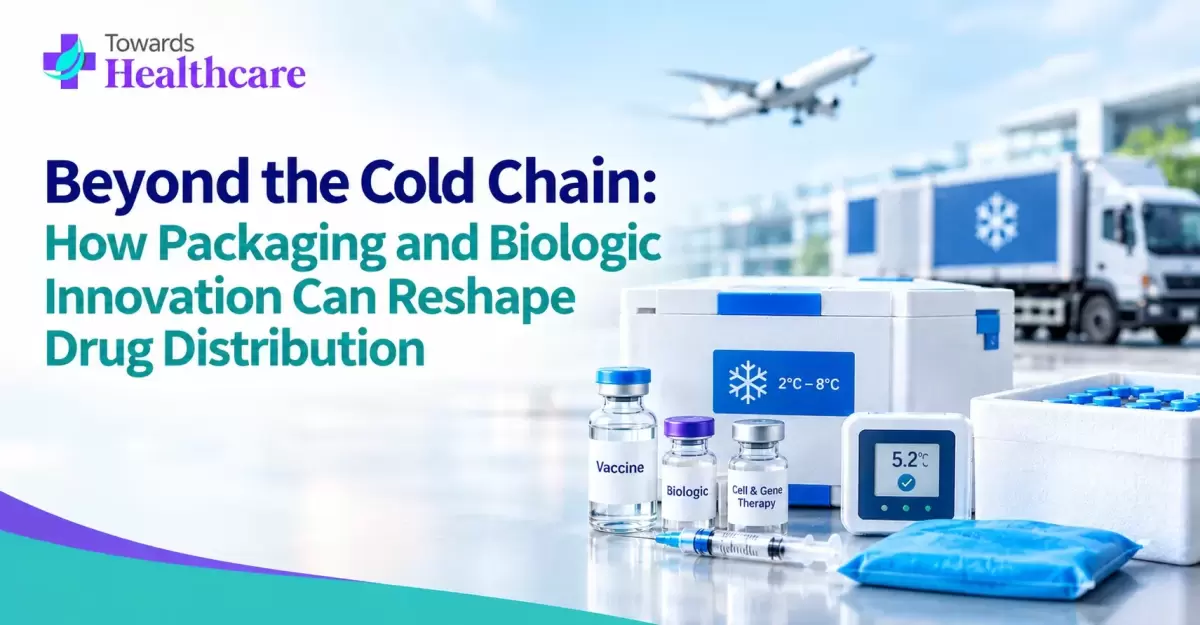
Biologics, including vaccines, therapeutic proteins, plasma products, and cell and gene therapies, are highly sensitive to environmental conditions. Their distribution often depends on temperature-controlled packaging, storage, and transportation, making the cold chain an important part of pharmaceutical logistics.
Why Temperature-Controlled Distribution Is a Challenge
The CDC's July 2026 guidance specifies refrigerator storage of 2°C to 8°C, freezer storage of -50°C to -15°C, and ultra-cold storage of -90°C to -60°C for applicable vaccines. The agency also recommends digital data loggers for routine storage and transportation.
Maintaining these conditions requires refrigeration equipment, specialized packaging, monitoring systems, electricity, and trained personnel. WHO notes that conventional 2°C to 8°C requirements can create logistical constraints, particularly where cold-chain and ice-pack capacity is limited.
Moving Toward More Flexible Biologic Supply Chains
The industry is exploring thermostable formulations, lyophilization, advanced excipients, improved container systems, smart temperature indicators, and point-of-care manufacturing. These approaches could reduce the dependence on continuous refrigeration for selected products.
WHO's controlled-temperature-chain program shows the potential of this approach. Eligible vaccines can tolerate temperatures of at least 40°C for a minimum of three days immediately before administration when specifically licensed and monitored under CTC conditions.
What the Industry Still Needs to Solve
Temperature excursions remain a significant concern because inappropriate storage conditions can affect vaccine quality. WHO reports that studies in both developed and developing countries have identified potentially damaging temperature exposures across vaccine supply chains.
For biologics, researchers must also address protein instability, freezing and thawing stresses, formulation limitations, regulatory requirements, and packaging performance.
Opportunities for Pharmaceutical Packaging
Reducing cold-chain dependence could simplify distribution, reduce infrastructure requirements, limit temperature-related losses, and improve access to biologic medicines. For packaging companies, opportunities include advanced thermal materials, passive temperature-control systems, smart indicators, real-time monitoring, and packaging designed for more temperature-tolerant formulations.
As biologics become more complex, collaboration among drug developers, packaging manufacturers, biomanufacturers, logistics providers, and regulators will be essential to develop safer and more flexible distribution systems.
Reference
https://www.towardshealthcare.com/insights/pharmaceutical-market-sizing
https://www.towardshealthcare.com/insights/biologics-market-size









Comments (0)