
PPWR is shifting recycling value from volume to quality, increasing demand for traceability, purity and advanced sorting technologies.
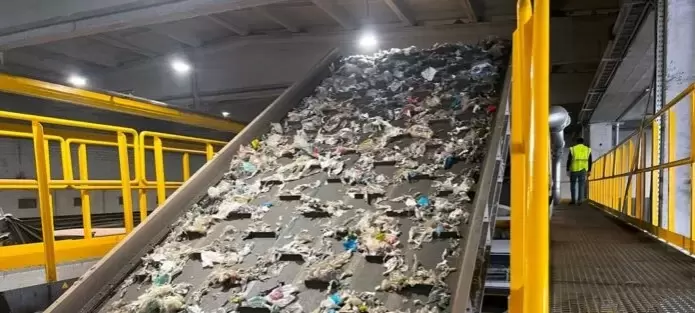
PPWR shifts recycling from volume recovery to material quality
The Packaging and Packaging Waste Regulation (PPWR) is expected to reshape the economics of plastic recycling in Europe by increasing demand for high-quality recycled materials that can return into demanding packaging applications.
While much of the discussion around PPWR has focused on compliance obligations, the regulation is also changing the commercial value of recycled plastics. The market is moving from simply recovering more material towards producing recycled polymers with predictable quality, traceability and performance.
This shift is creating new opportunities for recyclers, sorting operators and technology providers capable of delivering higher-quality material streams.
Recycled content requirements increase demand for quality
As recycled-content targets become more important, packaging producers and converters will require reliable access to recycled materials that meet increasingly strict specifications.
Brand owners need recycled content to comply with future requirements, while converters need consistent feedstock that can perform similarly to virgin polymers.
For recyclers, this means the objective is changing. Sorting is no longer only about recovering waste materials; it is increasingly about producing defined secondary raw materials suitable for specific applications.
Traceability becomes part of recycling value
Future recycling systems will require stronger evidence about the origin, quality and performance of recovered materials.
Questions such as contamination levels, feedstock stability, achieved purity and long-term quality consistency are becoming increasingly important for companies buying recycled polymers.
Data and material intelligence systems are therefore becoming a critical part of recycling operations, allowing facilities to monitor flows, optimise processes and demonstrate compliance with customer and regulatory expectations.
Purity determines the value of recycled plastics
Higher-quality recycled materials can access more valuable markets than lower-grade recyclates.
Food-contact applications, bottle-to-bottle PET recycling and future recycled polypropylene and polyethylene applications require significantly higher purity levels than many traditional recycling outputs.
Even relatively small improvements in sorting accuracy can therefore have a major impact on the economic value of recovered plastics.
AI improves sorting performance
Advanced sorting technologies are becoming increasingly important as recyclers attempt to produce materials suitable for demanding applications.
Deep-learning systems, improved object recognition and more precise material identification allow facilities to separate plastics with greater accuracy and reduce contamination.
The objective is not simply to sort more efficiently, but to create recycled materials capable of replacing virgin polymers in high-value packaging applications.
Flexible packaging becomes a new recycling opportunity
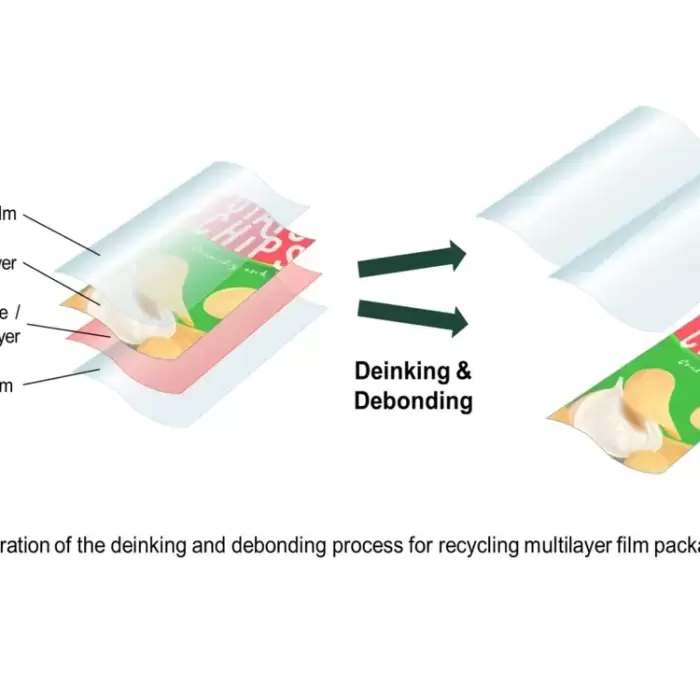
Flexible packaging represents one of the biggest challenges and opportunities for future recycling systems.
Films represent a significant share of packaging placed on the market, but collection, sorting and recycling infrastructure remains less developed compared with rigid plastics such as PET bottles.
As PPWR increases demand for recycled content, operators capable of recovering and upgrading flexible plastic fractions could gain access to new markets.
Packaging design becomes linked to recycling economics
PPWR is also influencing how packaging is designed.
Brands, converters, recyclers and technology companies are increasingly collaborating to create packaging that can be collected, sorted and recycled effectively in real-world systems.
Recyclability is therefore moving from a theoretical design objective towards a measurable performance characteristic influenced by material choice, structure, decoration and available recycling infrastructure.
Industrial recycling moves towards circular raw materials
The next phase of plastic recycling will depend on creating reliable secondary raw materials rather than simply increasing collection volumes.
Examples across PET trays, food-contact recycled polypropylene and flexible packaging demonstrate that higher-quality recycling is becoming technically possible at industrial scale.
The challenge now is expanding these capabilities while ensuring that packaging design, collection systems and recycling technologies evolve together.
PPWR creates opportunities for quality-focused recyclers
As PPWR implementation progresses, companies investing in sorting performance, material intelligence and quality control may gain a competitive advantage.
The regulation is therefore expected to change not only compliance requirements but also the economics of the recycling market itself.
The future value of recycled plastics will increasingly depend on the ability to produce materials that can repeatedly return to demanding packaging applications with consistent performance.








Comments (0)