
Recyclable packaging helps brands reduce packaging waste by using materials that can be collected, processed, and reused. The article explores key trends such as mono-material packaging, recycled content, lightweight materials, and paper-based solutions. It also highlights challenges including limited recycling infrastructure, contamination, complex materials, and costs, while examining opportunities for brands to improve resource efficiency, meet sustainability goals, and support a more circular packaging
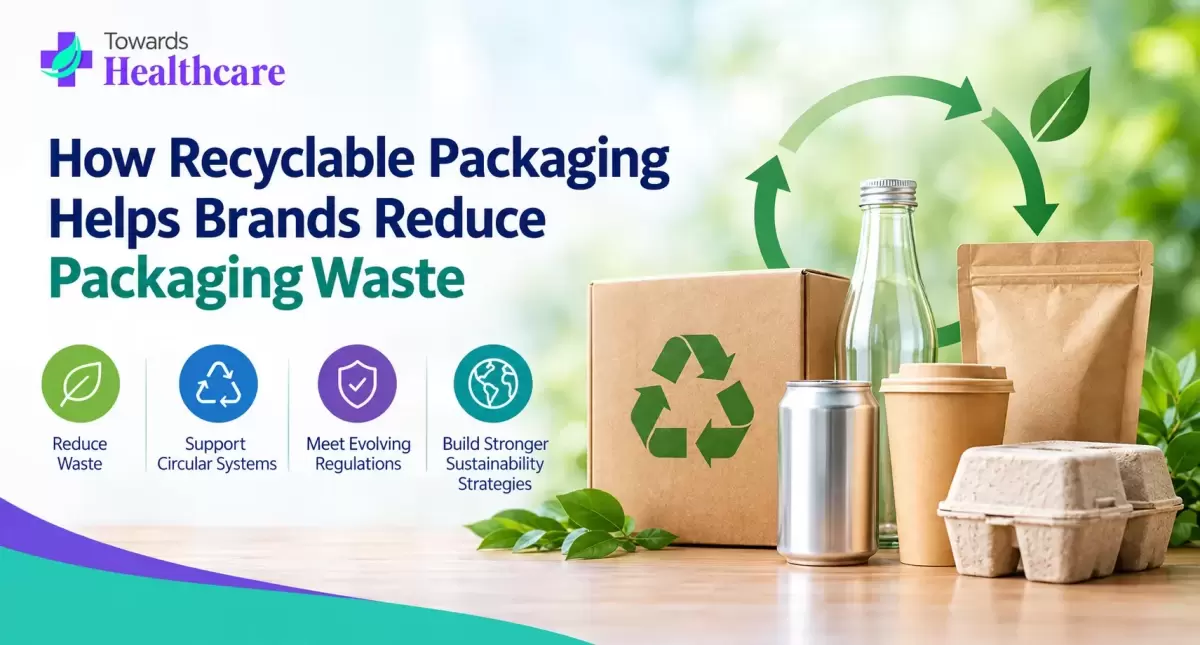
Packaging plays an important role in protecting products, but growing packaging waste is pushing brands to rethink the materials they use. Recyclable packaging offers a practical way to reduce waste while supporting more circular material systems.
According to Towards Healthcare Research and Consulting study, recyclable packaging uses materials that can be collected, processed, and converted into new products. Paper and cardboard, glass, metals, and certain plastics can support recycling when they are properly designed and compatible with available collection and recycling infrastructure.
Key Trends
Brands are increasingly exploring mono-material flexible packaging, recycled content, lightweight packaging, paper-based solutions, and recyclable barrier materials. Packaging design is also moving toward simpler material structures because packaging made from multiple bonded materials can be more difficult to recycle. Digital labeling and improved sorting technologies are further supporting material recovery.
Challenges
Recyclable packaging still faces several challenges. Recycling infrastructure differs significantly between regions, meaning packaging accepted in one location may not be recyclable elsewhere. Food contamination, multilayer structures, additives, inks, and coatings can also affect recyclability. Brands must therefore consider the complete packaging lifecycle rather than simply replacing one material with another.
Cost is another challenge, particularly when recycled materials or new packaging technologies require additional processing or investment.
Opportunities for Brands
Despite these challenges, recyclable packaging creates opportunities for companies to reduce material waste, improve resource efficiency, respond to changing packaging regulations, and strengthen sustainability strategies. Better packaging design can also improve transportation efficiency by reducing unnecessary material and weight.
The next phase of recyclable packaging will depend on collaboration between packaging manufacturers, recyclers, retailers, regulators, and brands. Designing packaging for recovery from the beginning can help companies move beyond waste reduction toward a more circular packaging economy.
Reference
https://www.towardshealthcare.com/insights/pharmaceutical-market-sizinghttps://www.towardshealthcare.com/insights/renewable-or-sustainable-laboratory-plasticware-market-sizing










Comments (0)